
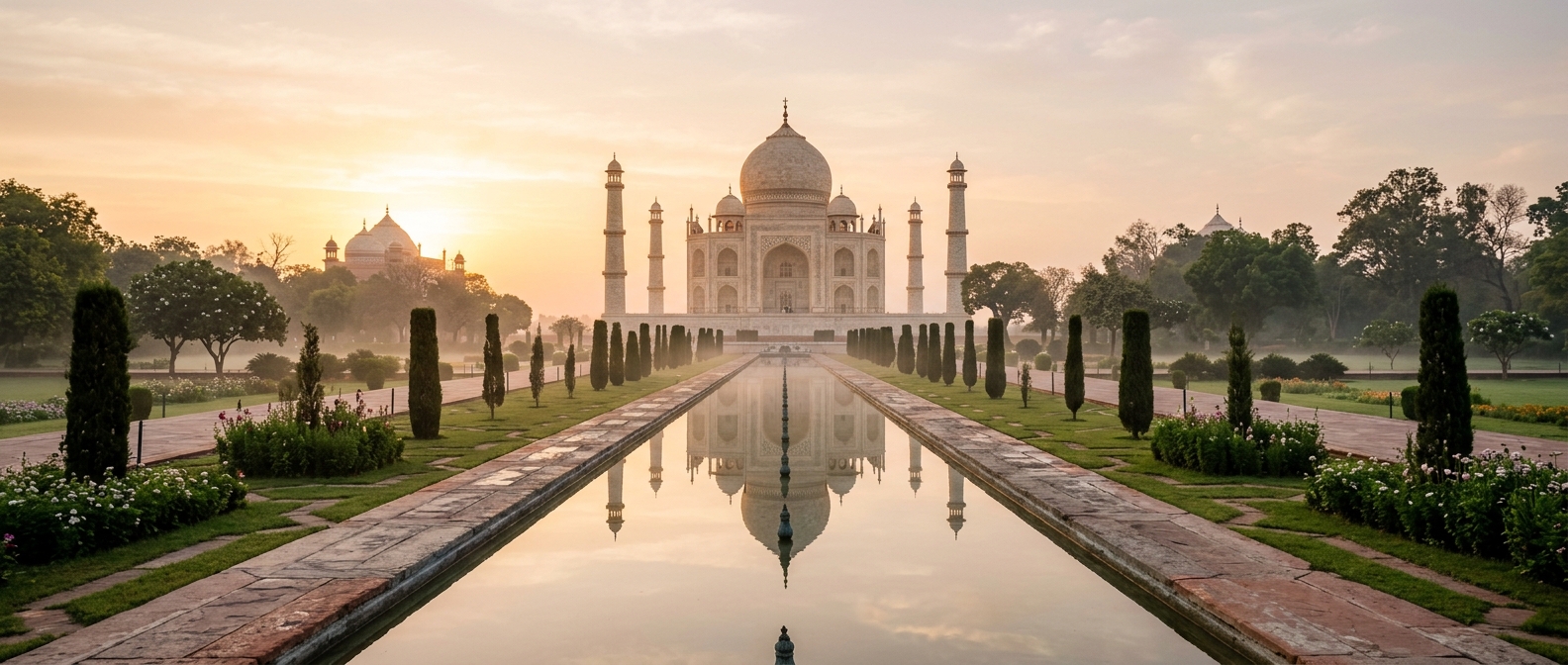
India rewards the people who plan for it. The trip itself, whether it is the Golden Triangle, a Goan beach, the Kerala backwaters, or weeks with family across several states, tends to be the easy part to picture. The health side is the part most people leave until the last fortnight, usually after a relative mentions a jab they think you need. By then some of the most useful vaccines are already tight on time.
This guide sets out what you actually need before you travel to India, why each vaccine matters, what it costs at Medihub Pharmacy, and how far ahead to come in. We see travellers face to face at both our Swansea branches, assess your specific itinerary, and give you a clear plan rather than a generic list. By the end of this page you will know exactly what to book.
Why Medihub?
Medihub Pharmacy runs a private travel clinic from two Swansea branches, Killay and Pontarddulais, both staffed by GPhC-registered Independent Prescribers. We are a registered Yellow Fever Vaccination Centre. Your first travel consultation is free, vaccines are in stock, and we can start your course the same day. No GP referral needed.
A quick word on who this matters most for. Travellers visiting friends and family in India are often the most relaxed about vaccines, because the destination feels familiar and previous trips passed without incident. The clinical picture does not work that way. Longer stays, home-cooked food and local water, time in rural areas, and close contact with the community all raise exposure. Familiarity is not protection, and we plan for the trip you are actually taking.
Do You Need Vaccines for India?
For UK travellers flying directly to India, there are no vaccines that India legally requires for entry. That is the short answer, and it is also where a lot of people stop reading, which is a mistake. “Not required for entry” is an immigration rule, not health advice. The vaccines that matter for India are the ones that are strongly recommended on health grounds, and several of them are important for every traveller regardless of itinerary.
There is one situation where a vaccine becomes a genuine entry requirement. India asks for a Yellow Fever vaccination certificate from travellers arriving from, or who have recently transited, a country with a risk of yellow fever transmission, mainly parts of sub-Saharan Africa and South America. It does not apply to travellers coming straight from the UK. As a registered Yellow Fever Vaccination Centre, we can advise on this and issue the certificate if your route needs it. If you want the detail on the rules, read our guide on whether there are mandatory vaccines for India.
Required vs recommended
Required means a country will not let you in without it (for India, only the Yellow Fever certificate, and only on certain routes). Recommended means the vaccine protects your health even though no border official will ask for it. For India, the recommended list is the one that counts.
The Vaccines We Recommend for India
The right combination depends on where you are going, how long for, and what you will be doing. The vaccines below are the ones we discuss most often for India, grouped by how widely they apply. Your prescriber confirms your personal list at your consultation, based on NaTHNaC TravelHealthPro guidance for India.

Recommended for almost every traveller
Hepatitis A is one of the most important vaccines for India. The virus spreads through contaminated food and water, and the risk is present across the country, including in good hotels, because it follows the food supply rather than the star rating. A single dose gives strong protection within about two weeks, and a second dose six to twelve months later extends cover for years.
Typhoid is also food and water-borne and common throughout India, with drug-resistant strains circulating. It is a single injection that protects within a week or two. Tetanus, diphtheria and polio cover is the other near-universal recommendation. India has high road traffic accident rates, which makes tetanus protection relevant for wound risk, so a combined booster is worth having if you are not current within ten years.
Recommended based on your trip
Rabies deserves more attention than it usually gets for India. Hepatitis B becomes relevant for longer trips, repeated visits, or any situation where medical or dental treatment, tattoos or piercings are possible, and it can be given as a three-dose course. Japanese Encephalitis is recommended for longer stays in rural areas, particularly during and after the monsoon and in the eastern states, while urban-only trips to Delhi, Mumbai or Goa are usually low risk. Cholera and Meningitis ACWY are considered for specific situations, such as long stays in areas with poor sanitation, humanitarian work, or large pilgrimage gatherings. Your prescriber will tell you which of these apply to you rather than selling you the full list.
Rabies in India
~20,000
estimated human rabies deaths in India each year
Stray dogs and monkeys at temples and tourist sites are the main risk. Pre-travel vaccination widens the window for treatment after a bite and removes the need for rabies immunoglobulin, which is often hard to find in India. Source: WHO estimate.
Children are a particular consideration for rabies, as they are more likely to approach animals and less likely to report a scratch or nip. If you are travelling as a family, raise it at your consultation. It is also worth keeping your MMR up to date given ongoing measles activity worldwide, and your prescriber can check your history at the same appointment.
Malaria in India: Do You Need Tablets?
Malaria is the part of India travel health that generic advice gets wrong most often, usually by treating the whole country as one risk level. It is not. Risk varies enormously by region and altitude, and the honest answer for many travellers is bite avoidance rather than tablets, while for others antimalarials are firmly recommended.

Major tourist routes such as Delhi, Mumbai, Jaipur, Agra and Goa are generally low risk, where careful bite avoidance is the main measure. Several eastern and central states, including Assam, Odisha, Chhattisgarh and Jharkhand, carry higher risk where tablets such as atovaquone with proguanil, or doxycycline, are recommended. There is also a current UK shortage of mefloquine to be aware of. Because this genuinely depends on your route, we work through it properly at your appointment. For the full regional breakdown, read our guide on whether you need malaria tablets for India.
When to Get Your India Vaccinations
The ideal time to come in is around six to eight weeks before you travel. That leaves room for courses that need more than one dose, such as rabies or hepatitis B, and lets protection build before you fly. It also means we can space appointments around your life rather than rushing everything into one visit.
If your trip is sooner than that, it is still worth coming in. Single-dose vaccines such as hepatitis A and typhoid work quickly, and accelerated schedules exist for some courses. Last-minute is better than nothing, and we would rather get you the protection that time allows than turn you away. For the detail on timing and accelerated options, see our guide on how long before travel to get your India vaccinations.
India Travel Vaccine Costs at Medihub
Your initial travel consultation is free. A fixed £20 consultation fee applies to a visit where you have vaccines, and £10 for any follow-up visit after that. This is charged per visit, not per vaccine, so having several jabs in one appointment keeps the cost down. The vaccine prices below are the ones most relevant to India.
A common starting point for a standard tourist trip is hepatitis A, typhoid and a tetanus, diphtheria and polio booster, with rabies added for many itineraries. We will give you a clear, itemised plan at your consultation so there are no surprises.
Different Trips, Different Needs
No two India trips need the same plan. A few common profiles show how the advice shifts.
Golden Triangle tourists visiting Delhi, Agra and Jaipur are usually on the food, water and rabies side of the picture, with malaria tablets rarely needed for the cities. Kerala travellers add a JE conversation if they are heading rural in the monsoon, and leptospirosis becomes relevant around backwaters. Travellers visiting family across several states are the highest-risk group, with longer stays, more rural time, and full food and water exposure, so the plan is usually the most complete. If you are heading to the beaches, our dedicated guide to travel vaccines for Goa covers that itinerary in detail.

The Medihub advantage
Two Swansea branches. GPhC-registered Independent Prescribers. A registered Yellow Fever Vaccination Centre. Free initial travel consultation, vaccines in stock, and same-day starts. A plan built around your itinerary, not a generic checklist.
Why Travellers Choose Medihub
A travel vaccine plan is only as good as the clinician behind it. At Medihub you are seen in person by a named Independent Prescriber, a pharmacist with the qualification to assess and prescribe in their own right. At Killay that is Osama Al-Saied, GPhC number 2222112, publicly verifiable on the pharmacy regulator’s register. At Pontarddulais you are seen by Carwyn Jones, also a GPhC-registered Independent Prescriber. You are assessed by a real clinician who looks at your itinerary, not a form processed at a distance.
Both branches keep travel vaccines in stock, so for most itineraries you can start your course the same day. The Killay branch on Gower Road, SA2 7BA, is convenient for Killay, Sketty, West Cross and the Gower peninsula. The Pontarddulais branch on St Teilo Street, SA4 8ST, suits Pontarddulais, Gorseinon, Llansamlet and Morriston. The service and pricing are identical at both.
“Had an appointment with the prescribing chemist Osama, who was incredibly helpful and kind. Gave me all the information I needed in a way I could understand.”
Sophie H. — Google Review
<
Do you need travel jabs for India?
Answer four quick questions for a guide to what your trip may need. This is a quick guide, not medical advice, and your answers are not stored. Your prescriber confirms your plan at your consultation.
- Hepatitis A£50 / dose
- Typhoid£35
- Diphtheria, Tetanus & Polio£35
- Rabies (Rabipur)£80 / dose
Free initial consultation. £20 consultation fee on a vaccine visit, £10 per follow-up (per visit, not per vaccine). We are a registered Yellow Fever Vaccination Centre.
or call Pontarddulais 01792 882243 · Killay 01792 202471
This tool offers general guidance only and does not replace a consultation. A prescriber will assess your individual needs and confirm what is right for you.
Frequently Asked Questions
Are any vaccines legally required to enter India?
Not for travellers flying directly from the UK. The only entry requirement is a Yellow Fever certificate, and that applies only if you are arriving from or have recently transited a country with a risk of yellow fever transmission. Everything else recommended for India is for your health, not for the border.
Which vaccines matter most for India?
Hepatitis A and typhoid are near-universal because they are food and water-borne and common across the country. A tetanus, diphtheria and polio booster is recommended if you are not current. Rabies, hepatitis B and Japanese Encephalitis are added depending on your itinerary, length of stay and activities. Your prescriber confirms your personal list.
Do I need malaria tablets for India?
It depends on where you are going. Major tourist cities are generally low risk, where bite avoidance is the main measure, while several eastern and central states are higher risk and tablets are recommended. We assess your route at your consultation and advise accordingly.
How far in advance should I book?
Around six to eight weeks before travel is ideal, as it allows time for multi-dose courses to build protection. If your trip is sooner, it is still worth coming in, because single-dose vaccines work quickly and accelerated schedules are available for some courses.
Why is rabies recommended for India?
India has one of the highest rates of human rabies in the world, with stray dogs widespread and monkeys a known bite risk at temples and tourist sites. Vaccinating before you travel widens the time you have to get treatment after a bite and removes the need for rabies immunoglobulin, which can be difficult to obtain in India. It is particularly worth considering for children and rural travel.
Can I get all my India vaccines in one visit?
Often, yes. Several vaccines can be given at the same appointment, and because the consultation fee is charged per visit rather than per vaccine, combining them keeps the cost down. Multi-dose courses such as rabies and hepatitis B will need follow-up visits to complete.
Do I need a GP referral, and which branch do I go to?
No referral is needed. You can book directly with either branch. Killay on Gower Road (SA2 7BA) suits patients across Killay, Sketty and the Gower peninsula, while Pontarddulais on St Teilo Street (SA4 8ST) is convenient for Pontarddulais, Gorseinon and Morriston. The travel clinic, pricing and clinical standard are the same at both.
I am visiting family in India and have been many times. Do I still need vaccines?
Previous trips without illness do not lower the risk on your next one. Travellers visiting friends and family tend to stay longer, spend more time in rural areas, and eat and drink in the community, all of which increase exposure. It is worth a full consultation so your plan reflects the trip you are actually taking.
Travelling to India? Get a plan built around your trip.
Free initial consultation, vaccines in stock, same-day starts at both Swansea branches.
Reviewed and medically verified by
Osama Al-Saied, Independent Prescriber
GPhC Number: 2222112 | Independent Prescriber
Medihub Pharmacy, Killay and Pontarddulais, Swansea
Verify on the GPhC register
Last reviewed: 30 June 2026 · Medically reviewed ✓