
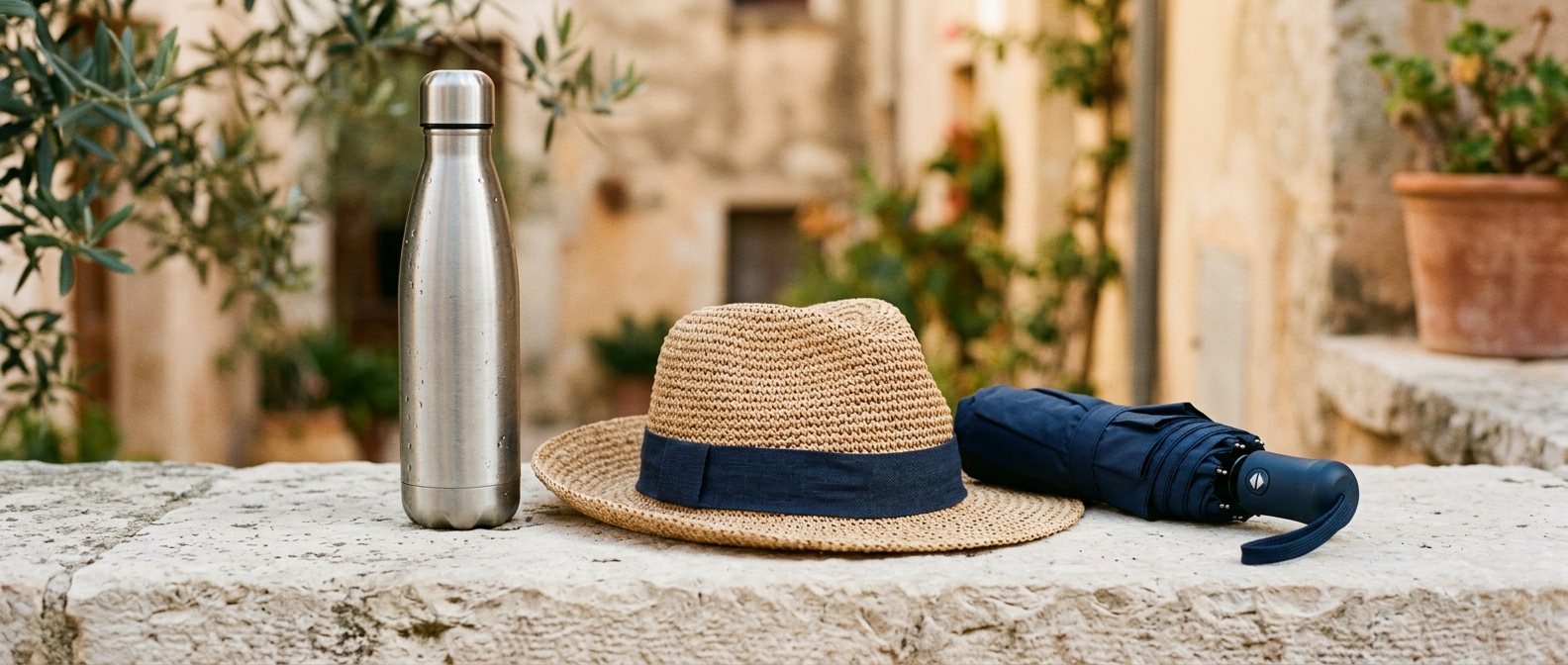
Vaccines cover the serious infections, but a great deal of staying well on Hajj or Umrah comes down to the everyday things: the heat, the crowds, and looking after yourself across long, physically demanding days. Pilgrims who plan for these tend to have a smoother journey. This guide is the practical companion to our complete guide to Hajj and Umrah vaccinations.
Coping with the Heat
Saudi Arabia can be extremely hot, and when Hajj falls in the summer months the temperatures are punishing, especially during the long periods outdoors. Heat exhaustion and heatstroke are genuine risks. Drink water regularly rather than waiting until you are thirsty, use an umbrella or head covering for shade, and rest in cooler areas when you can. Watch for warning signs such as dizziness, headache and cramps, and cool down and rehydrate straight away if they appear.
Crowds and Respiratory Infections
Bringing millions of people together means coughs and colds pass around easily, and respiratory infections are the most common illness pilgrims pick up. Simple habits help: wash your hands often or use a sanitiser, carry tissues and cover coughs and sneezes, and wear a face covering in the most crowded moments. Seasonal flu vaccination before you travel is strongly encouraged for the same reason, which is covered in the recommended vaccines for Hajj and Umrah.
- Wash or sanitise your hands regularly, especially before eating.
- Carry tissues and cover coughs and sneezes.
- Wear a face covering in dense crowds if you wish.
- Avoid sharing cups, bottles and personal items.
Food, Water and Foot Care
Stick to safe drinking water and be sensible with food from very busy communal settings, as stomach upsets are common. Hepatitis A and typhoid vaccination reduces the more serious food and water-borne risks, which is why they are recommended. Feet take a battering during Hajj and Umrah with all the walking, often on hot ground, so comfortable footwear, blister care and keeping feet clean and dry all matter more than people expect.
Avoid Close Contact with Camels
Camels in the region can carry a respiratory infection known as MERS, so it is sensible to avoid close contact with them, and to avoid raw camel milk or undercooked camel meat. This is a straightforward precaution rather than a cause for alarm, and your prescriber can talk you through it if you have questions.
Get the health basics sorted before you go
Vaccines, the mandatory meningitis certificate and travel health advice at both Swansea branches. Free initial consultation.
Frequently Asked Questions
How do I avoid getting ill in the crowds?
Wash your hands often, cover coughs and sneezes, consider a face covering in dense crowds, and avoid sharing cups and personal items. Seasonal flu vaccination before you travel helps too.
How can I manage the heat?
Drink water regularly, use shade and a head covering, rest in cooler areas when you can, and act quickly if you feel dizzy or crampy. Heat exhaustion is a real risk, especially during a summer Hajj.
Should I really avoid camels?
It is a sensible precaution. Camels can carry a respiratory infection called MERS, so avoid close contact, and avoid raw camel milk and undercooked camel meat.
Do I still need vaccines if I am careful?
Yes. Good habits and vaccines work together. The Meningitis ACWY certificate is mandatory, and hepatitis A, typhoid and flu are recommended. See our full Hajj and Umrah vaccinations guide.
A little preparation makes a hard journey easier and safer. Get your vaccines and the mandatory certificate sorted at either branch, and read everything you need for Hajj and Umrah before you go.
Reviewed and medically verified by
Osama Al-Saied, Independent Prescriber
GPhC Number: 2222112 | Independent Prescriber
Medihub Pharmacy, Killay and Pontarddulais, Swansea
Verify on the GPhC register
Last reviewed: 17 August 2026 · Medically reviewed ✓